
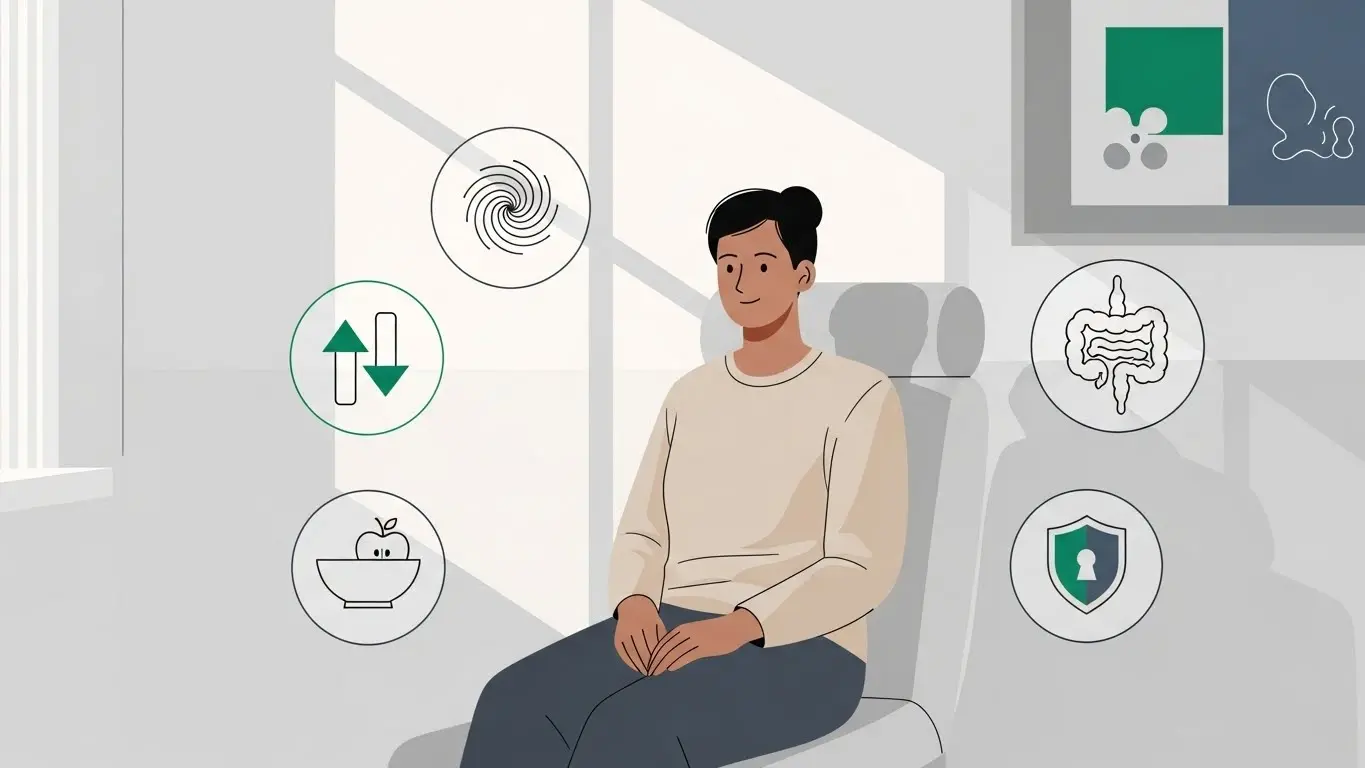
Clinician-style guidance
This article is written in a clinical, patient-friendly style and is intended to help you understand common side effects, practical symptom-reduction strategies, and safety red flags.
How to use this page
If symptoms are mild, start with “How clinicians reduce symptoms.” If symptoms feel severe or scary, jump directly to Red flags.
Quick summary: what’s common vs what needs urgent review
GLP-1 medications work partly by slowing stomach emptying and changing appetite signaling. That’s why many side effects involve the digestive system — especially in the first weeks or after a dose increase.
Often common (but still worth mentioning)
- Mild to moderate nausea, especially after meals
- Feeling full quickly (early satiety) or reduced appetite
- Constipation or looser stools (bowel pattern changes)
- Heartburn or burping after large or fatty meals
- Fatigue in the first 1–2 weeks, especially if calories drop fast
These are frequently improved with slower titration, smaller meals, hydration, and food choices.
Not “normal”: call a clinician promptly
- Severe or persistent vomiting
- Severe abdominal pain (especially persistent or worsening)
- Signs of dehydration (dizziness, very dark urine, fainting)
- Allergic reaction symptoms (swelling, hives, trouble breathing)
- Black or bloody stools, chest pain, confusion, or severe weakness
If symptoms feel like an emergency, seek urgent/emergency care immediately.
Why GLP-1 side effects happen (the simple explanation)
GLP-1 therapies were developed to support blood glucose control and, in many people, weight and cardiometabolic outcomes. They work through several pathways — including hormone signaling in the gut and brain.
The same mechanisms that help appetite control can also create predictable early symptoms: when your stomach empties more slowly, large meals can sit longer; when appetite drops quickly, you might eat less than your body is used to; and when food intake changes, your bowel habits may shift.
The 3 main drivers of GI symptoms
- Slower gastric emptying: food stays in the stomach longer, especially after a larger meal.
- Appetite and satiety signaling: fullness arrives sooner, and overeating feels unpleasant.
- Diet pattern change: sudden lower calories, different foods, or less fiber can shift bowel habits.
The goal is not “push through suffering.” The goal is safe, tolerable therapy. That’s why dose titration and practical habits matter as much as the medication itself.
Common GLP-1 side effects: nausea, GI changes, and fatigue
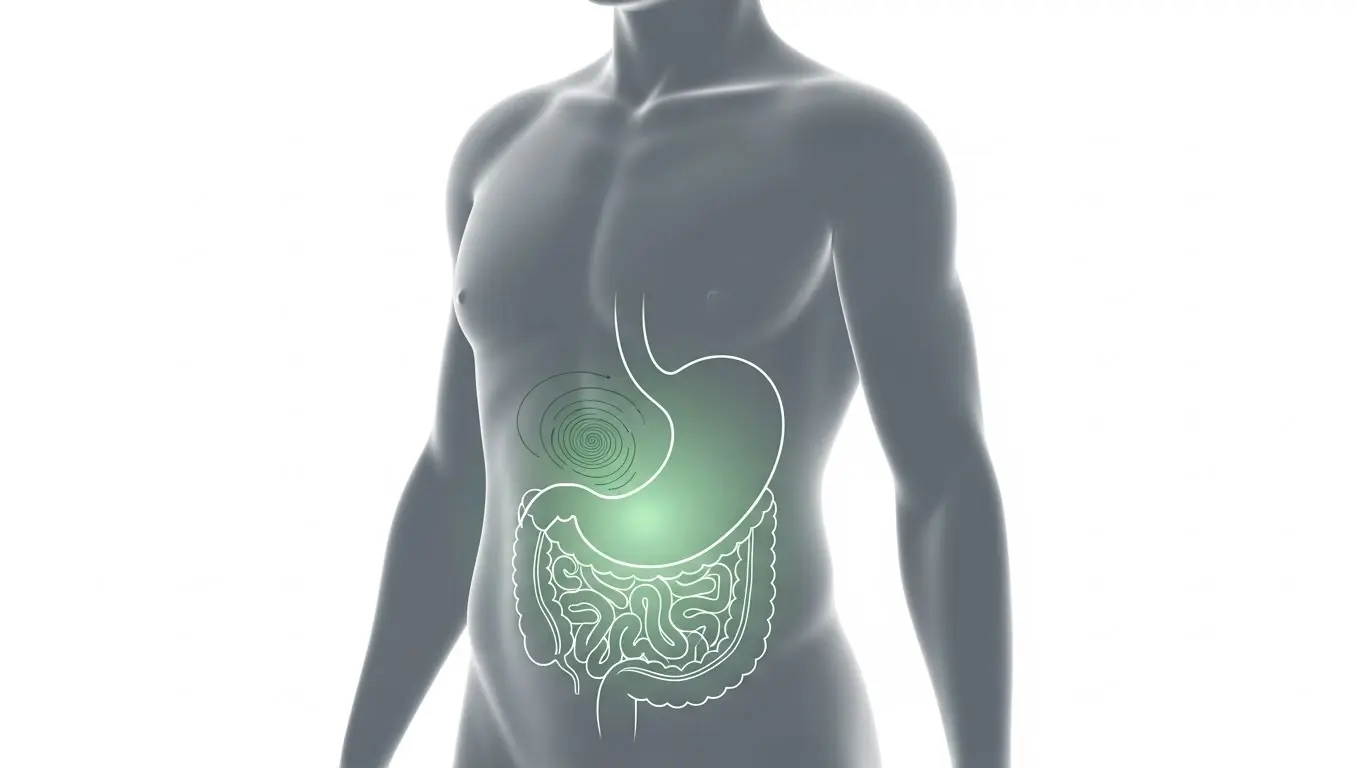
1) Nausea (most common concern)
Nausea is one of the most commonly reported side effects. It often appears: (1) when starting therapy, (2) after dose increases, or (3) after large, fatty, or fast-eaten meals.
What it can feel like
- Queasiness after meals
- Loss of interest in food
- “Food sitting” sensation
- Burping, reflux, or mild stomach upset
What often triggers it
- Large portions
- Greasy / fried foods
- Very sweet foods
- Eating quickly or eating late at night
2) Constipation or diarrhea (bowel pattern changes)
Some people become constipated; others notice looser stools. Both can happen during adjustment. Constipation is often linked to reduced food volume, reduced fiber, and dehydration. Diarrhea can occur from diet changes, sensitivity to certain foods, or medication adjustment.
Practical note
“Normal” bowel frequency varies. What matters is a new pattern that’s uncomfortable, persistent, or combined with warning signs like severe pain, dehydration, or blood in stool.
3) Heartburn, bloating, or “fullness”
Because gastric emptying slows, you may feel full sooner or feel bloated after larger meals. This is one reason clinicians emphasize smaller portions and slower eating — not “force yourself to finish.”
4) Fatigue or “low energy” early on
Fatigue can happen in the early phase for a simple reason: appetite drops, calories drop, and hydration drops — often all at once. Many people unintentionally under-eat and under-drink.
If fatigue appears
- Check hydration first (urine color is a useful clue)
- Ensure adequate protein and steady meals (not long fasts if you feel weak)
- Review other medications that may contribute (especially diabetes medications)
- If fatigue is severe, persistent, or paired with dizziness—contact your clinician
If you also take diabetes medications, side effects may overlap with low blood sugar symptoms. That’s why medication review matters — see our diabetes overview: Metformin, GLP-1 therapy & long-term diabetes management.
How clinicians reduce symptoms (titration + habits that actually work)
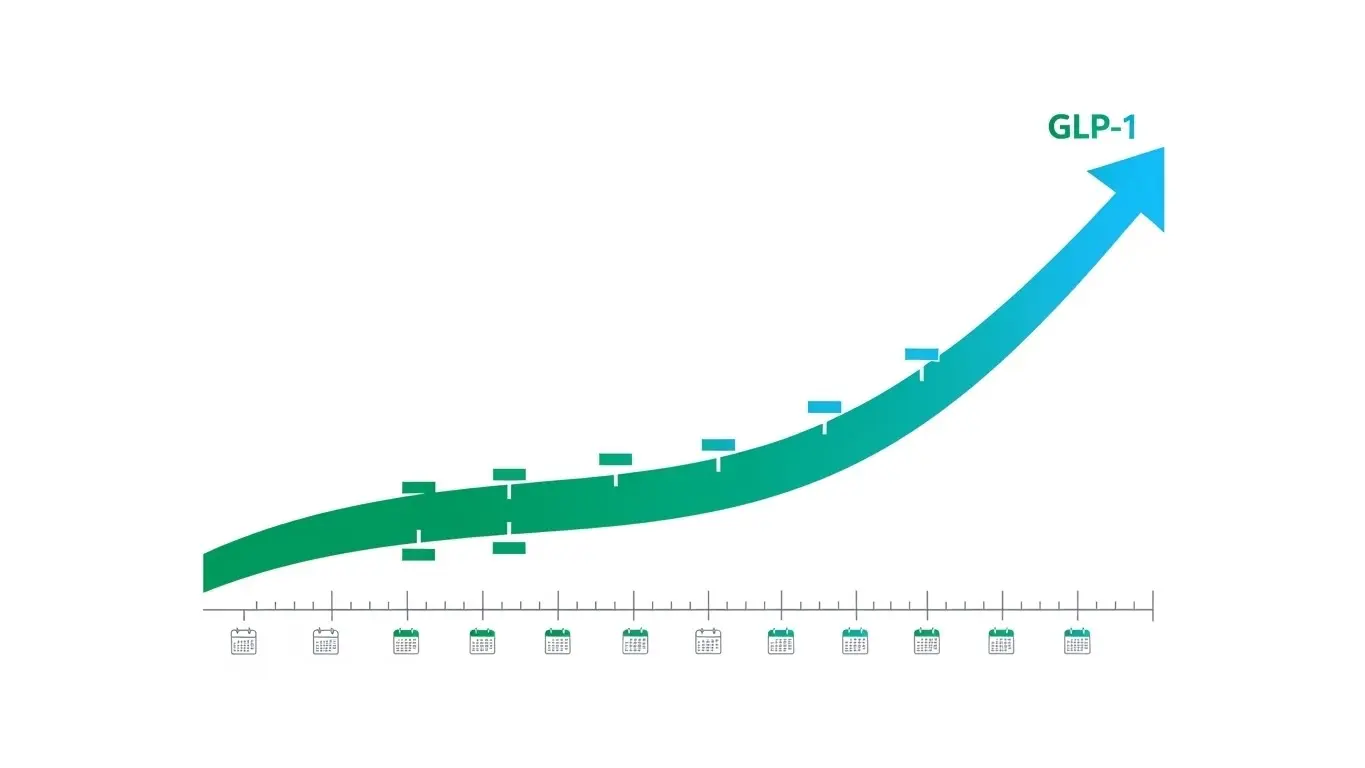
The most effective side-effect strategy is rarely a single “hack.” It’s a combination of titration (dose progression) plus simple, repeatable habits. Many people feel dramatically better after making just 2–3 adjustments.
Titrate gradually
Side effects often increase after dose changes. Clinicians may slow titration if symptoms are limiting.
Eat smaller meals
Smaller portions reduce the “food sitting” feeling and lower nausea risk.
Hydrate consistently
Dehydration worsens nausea, constipation, and fatigue. Sip steadily, not only when thirsty.
A clinician-friendly symptom plan
If you have nausea
- Eat smaller, more frequent meals
- Avoid greasy/fried foods and very sweet foods
- Eat slowly; stop at “comfortably full”
- Try bland options temporarily (toast, rice, bananas, soups)
- Don’t lie down right after meals (helps reflux)
If you have constipation
- Increase fluids gradually
- Add fiber slowly (sudden fiber spikes can cause bloating)
- Include movement (even a daily walk helps bowel motility)
- Discuss persistent constipation with your clinician
The “overeat” trap
The most common mistake is eating the same large portion you ate before therapy. On GLP-1 medications, overeating can feel like “instant regret” — nausea, reflux, discomfort. Smaller portions are not dieting — they’re how the medication is designed to be tolerated.
Why titration matters so much
Many GLP-1 therapies use a step-up dosing schedule. The purpose is to give the body time to adapt. If symptoms are limiting, clinicians may adjust the plan rather than forcing progression.
If you’re wondering how Vitercure handles medication safety decisions, read: How Vitercure clinicians review prescriptions and protect safety.
Red flags: when to call a clinician urgently

Most people do not experience serious complications, but it’s important to recognize symptoms that should not be ignored. Use the list below as a safety guide. If symptoms feel like an emergency, seek emergency care.
Seek urgent medical review if you experience
- Severe or persistent abdominal pain (especially if worsening or continuous)
- Repeated vomiting or inability to keep fluids down
- Signs of dehydration: dizziness, fainting, confusion, very dark urine
- Allergic reaction: swelling of face/lips/tongue, hives, trouble breathing
- Black or bloody stools, vomiting blood, or severe weakness
- Severe low blood sugar symptoms (especially if on other diabetes meds): shaking, sweating, confusion, fainting
The safest approach is early review. If something feels “off,” don’t wait it out in silence — call your clinician.

Simple decision rule
- If symptoms are mild and improving → focus on hydration, smaller meals, and pacing.
- If symptoms are moderate and persistent → message/call your clinician for adjustments.
- If symptoms are severe, sudden, or scary → seek urgent care.
Special situations (diabetes meds, dehydration risk, travel)
If you take other diabetes medications
If you are on Metformin, insulin, or other diabetes medications, side effects and blood sugar patterns can interact. Some symptoms (shakiness, sweating, dizziness) can be related to low blood sugar rather than GI adjustment. A clinician should review your full regimen, dose timing, and trends.
If you can’t eat much (rapid appetite drop)
A rapid appetite drop can sound “good,” but it becomes a problem when you consistently under-eat and become weak, dizzy, or dehydrated. The goal is not starvation — it’s sustainable, safe progress.
Practical nutrition anchor
Many people do better by prioritizing: hydration + protein + a small consistent meal schedule. If you cannot keep fluids down, contact your clinician urgently.
If you’re traveling
Travel can worsen side effects due to different food, inconsistent water intake, and irregular meal timing. Keep meals smaller, avoid heavy/fatty meals, and plan hydration. If you experience severe symptoms while traveling, seek local urgent care.
Want the foundation first? Read: How GLP-1 medications support weight-loss.
Frequently asked questions
Are GLP-1 side effects normal at the beginning?
Many people experience mild nausea, fullness, or bowel changes early on—especially after dose increases. Symptoms often improve as the body adapts, but persistent or severe symptoms should be reviewed by a clinician.
How long do GLP-1 side effects usually last?
Common GI symptoms may peak in the first days after starting or increasing a dose, then ease over 1–3 weeks. Timing varies by medication, dose, and individual tolerance.
What foods make nausea worse on GLP-1 medications?
High-fat, greasy meals, large portions, and very spicy foods commonly worsen nausea. Smaller meals, lean protein, and slower eating often help.
Is vomiting a reason to stop GLP-1 therapy?
Not always, but repeated vomiting, inability to keep fluids down, or signs of dehydration require prompt clinician review. Your clinician may adjust dose timing, titration speed, or recommend an alternative.
When should I call a clinician urgently?
Seek urgent review for severe or persistent abdominal pain, signs of allergic reaction, black or bloody stools, severe dehydration, confusion, fainting, or any symptom that feels like an emergency.
Can I take GLP-1 medication with Metformin or other diabetes meds?
Many people use GLP-1 therapy alongside other medications, but combinations can change side-effect risk and blood sugar patterns. A clinician should review your full medication list and history.
Citations
Related guides
Next step
If you’re unsure whether your symptoms are expected or need review, start a secure consultation. A licensed clinician can guide dosing strategy and symptom management.