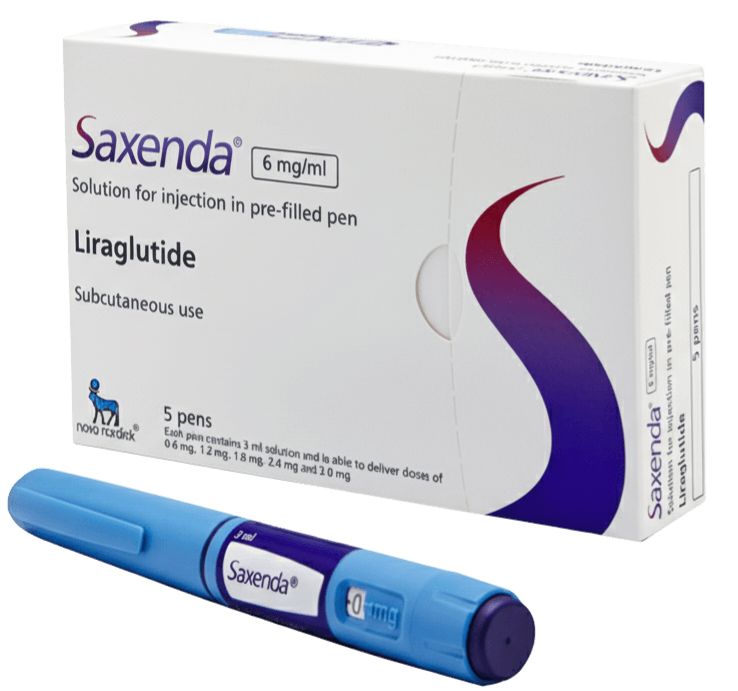
What Is Saxenda (Liraglutide)?
Saxenda contains liraglutide at a 3mg dose, a synthetic version of the GLP-1 hormone your body naturally releases after eating. It is FDA-approved specifically for chronic weight management and works by signaling fullness to the brain and slowing digestion. At 3mg, Saxenda is a weight management medication. At lower doses (1.2 to 1.8mg), the same ingredient is sold as Victoza for type 2 diabetes.
How Saxenda Works
Appetite RegulationLiraglutide binds to GLP-1 receptors in the hypothalamus, reducing hunger signals, food cravings, and the urge to snack between meals.
Slower Gastric EmptyingFood leaves your stomach more slowly, so you feel full longer after meals. This naturally reduces portion sizes without extreme restriction.
Who Qualifies for Saxenda?
Saxenda is indicated for adults with a BMI of 30 or above, or a BMI of 27 or above with at least one weight-related condition such as high blood pressure, type 2 diabetes, high cholesterol, or obstructive sleep apnea. It is also approved for adolescents aged 12 and older with obesity. A Vitercure clinician will review your full health profile before issuing any prescription.
Why Some Patients Prefer Saxenda Over Weekly GLP-1 Medications
The once-daily dosing gives clinicians and patients more flexibility to manage side effects gradually. For people who are especially sensitive to nausea and stomach discomfort, the ability to adjust the daily dose in smaller steps can make a real difference compared to the larger weekly jumps in medications like Wegovy or Ozempic. Some patients also find that a daily injection fits better into their routine as a behavioral anchor.
Saxenda for Prediabetes
The SCALE Prediabetes trial showed that 80% of patients on liraglutide 3mg returned to normal blood sugar at 56 weeks, compared to 45.5% on placebo. Saxenda also reduced progression to type 2 diabetes by 80% over 3 years. For patients with prediabetes and elevated body weight, Saxenda is one of the most evidence-supported medication options for preventing diabetes.
Saxenda Weight Loss Results (SCALE Trial Data)
The SCALE trial program enrolled over 5,000 patients across multiple sub-studies and is the foundation of Saxenda's clinical evidence. Here are the key outcomes from each study.
| Trial | Population | Avg Weight Loss | Key Finding |
|---|
| SCALE Obesity | Obesity/overweight | 8.0% body weight | 63% lost 5% or more; 33% lost 10% or more |
| SCALE Prediabetes | Prediabetes | 6.1% body weight | 80% reverted to normal blood sugar |
| SCALE Diabetes | Type 2 diabetes | 6.0% body weight | 0.9% A1C reduction vs 0.4% placebo |
| SCALE Maintenance | After diet-based loss | +6.2% maintained | Saxenda maintained 6.2% more weight loss than placebo |
What to Expect: Saxenda Weight Loss Timeline
| Timeframe | Typical Dose | What to Expect |
|---|
| Week 1 | 0.6mg/day | Adjustment phase. GI side effects are most common here. Modest appetite changes begin. |
| Weeks 2 to 4 | 1.2 to 1.8mg/day | Appetite reduction becomes more noticeable. First 2 to 5 lbs of loss is typical. |
| Month 2 | 2.4 to 3.0mg/day | Full therapeutic dose reached. Weight loss accelerates. Most patients are on 3mg by the end of month 2. |
| Months 3 to 12 | 3.0mg/day | Continued weight loss toward plateau. SCALE trial average: 8% total body weight at 56 weeks. |
LEADER Trial: Cardiovascular Outcomes (Liraglutide)
In the LEADER trial, 9,340 adults with type 2 diabetes and high cardiovascular risk received liraglutide. The medication reduced the combined rate of cardiovascular death, heart attack, and stroke by 13% compared to placebo. While this data comes from a type 2 diabetes population, it supports the broader cardiovascular safety profile of liraglutide at therapeutic doses.
How to Use Saxenda
Administration Basics
- Form: Pre-filled multi-dose pen for once-daily subcutaneous injection.
- Frequency: Once daily, at the same time each day.
- Injection sites: Abdomen, thigh, or upper arm. Rotate sites each week.
- Timing: Any time of day, with or without food.
- Storage: Refrigerate unused pens at 36 to 46 degrees F. In-use pens may be stored at room temperature for up to 30 days.
Saxenda Dose Escalation Schedule
| Week | Daily Dose | Purpose |
|---|
| Week 1 | 0.6mg | Starter dose to assess tolerability. GI effects most common here. |
| Week 2 | 1.2mg | First increase if 0.6mg is tolerated. |
| Week 3 | 1.8mg | Appetite changes become more noticeable. |
| Week 4 | 2.4mg | Near-therapeutic dose. Weight loss typically picks up. |
| Week 5 onward | 3.0mg | Full therapeutic maintenance dose used in the SCALE trial. |
Why daily dosing has advantages: The once-daily format allows for smaller, more controlled dose steps than weekly GLP-1 medications. If you experience GI side effects, your prescriber can hold you at a lower daily dose for longer. That flexibility is not available with weekly injections like Wegovy or Mounjaro, which escalate in bigger jumps.
Saxenda vs Wegovy vs Zepbound: Key Differences
These are the three FDA-approved GLP-1 based weight loss medications most commonly compared. They differ in active ingredient, dosing frequency, and average weight loss outcomes.
| Feature | Saxenda | Wegovy | Zepbound |
|---|
| Active ingredient | Liraglutide 3mg | Semaglutide 2.4mg | Tirzepatide 15mg |
| Mechanism | GLP-1 only | GLP-1 only | Dual GIP + GLP-1 |
| Avg weight loss (trial) | 8.0% (SCALE, 56 wk) | 15.3% (STEP-1, 68 wk) | 22.5% (SURMOUNT-1, 72 wk) |
| Dosing frequency | Once daily | Once weekly | Once weekly |
| GI side effect control | High (micro-titration) | Moderate | Moderate |
When Saxenda May Be Preferred
- Patients who want maximum flexibility to adjust dose for GI tolerance.
- Those who found weekly GLP-1 side effects difficult to manage.
- Patients with prediabetes who want both weight loss and blood sugar reversal.
- Patients who prefer a daily routine anchor over a weekly injection schedule.
When Your Clinician May Suggest an Alternative
- Your primary goal is maximum weight loss (Zepbound at 22.5% or Wegovy at 15.3%).
- You strongly prefer a once-weekly injection schedule.
- You have type 2 diabetes requiring both glycemic and weight management.
Important Safety Information for Saxenda
This is not a complete list of warnings or side effects. Always review the full Prescribing Information and Medication Guide, and speak with a licensed clinician.
Boxed Warning: Thyroid C-Cell Tumors
Saxenda carries a boxed warning for possible thyroid C-cell tumor risk. Do not use if you or a family member has a history of medullary thyroid carcinoma (MTC) or Multiple Endocrine Neoplasia syndrome type 2 (MEN 2). Tell your clinician about any neck lump, trouble swallowing, hoarseness, or shortness of breath.
Other Serious Risks
Serious side effects can include pancreatitis, gallbladder problems, kidney injury, serious allergic reactions, depression or suicidal thoughts, and low blood sugar (especially when combined with diabetes medications). Seek urgent care for severe abdominal pain, signs of allergic reaction, or sudden changes in mood or behavior.
Common Side Effects
The most frequently reported side effects include nausea, vomiting, diarrhea, constipation, decreased appetite, headache, dizziness, fatigue, and injection site reactions. GI effects are most pronounced during dose escalation and typically lessen as the body adjusts. Saxenda's daily titration allows for slower dose increases, which some patients find helps manage these effects better.
Saxenda and Mental Health
Unlike most weekly GLP-1 medications, Saxenda's FDA label includes a specific warning for depression and suicidal thoughts. This is worth discussing with your clinician if you have a history of mood disorders. Report any mood changes, feelings of depression, or unusual thoughts to your prescriber immediately.
Frequently Asked Questions About Saxenda
In the SCALE Obesity and Prediabetes trial (3,731 participants, 56 weeks), adults on liraglutide 3mg plus diet and exercise lost an average of 8.0% of their body weight, compared to 2.6% on placebo. About 63% achieved at least 5% weight loss, 33% achieved 10% or more, and 14% achieved 15% or more. Your results will depend on your adherence, diet, activity level, and starting weight.
In terms of average weight loss, Wegovy (semaglutide 2.4mg) produced 15.3% in the STEP-1 trial and Zepbound (tirzepatide 15mg) produced 22.5% in SURMOUNT-1, both higher than Saxenda at 8%. However, Saxenda has a unique advantage: its daily dosing allows for much finer titration and better management of GI side effects for sensitive patients. Which is "better" depends on your goals, your tolerability, and your medical history. Your Vitercure clinician will help you decide.
Saxenda is not FDA-approved specifically for PCOS, but liraglutide targets insulin resistance, which is a core driver of PCOS symptoms. By improving insulin sensitivity, it can help lower androgen levels, improve menstrual regularity, and support weight loss in women with PCOS. Several clinical studies support its use in this population. Your Vitercure clinician will assess whether Saxenda is appropriate for your specific PCOS profile.
Yes. The SCALE Prediabetes trial showed that 80% of patients on liraglutide 3mg reverted to normal blood sugar at 56 weeks, compared to 45.5% on placebo. Over 3 years, Saxenda reduced progression to type 2 diabetes by 80%. If prediabetes is a primary concern alongside weight, Saxenda is one of the most evidence-supported medication options available.
Saxenda contains liraglutide and is injected once daily. Wegovy and Ozempic contain semaglutide, a structurally different molecule that stays active longer, allowing weekly dosing. Mounjaro and Zepbound contain tirzepatide, a dual GIP/GLP-1 agonist that typically produces the greatest weight loss of the group. Your clinician will consider dosing preference, tolerability, and effectiveness when recommending the right medication for you.
Yes. Transitioning between GLP-1 medications is common. Patients may switch for better weight loss, more convenient dosing, or improved tolerability. The switch requires careful planning by your prescriber to manage timing and dose equivalency. A Vitercure clinician can help plan a safe transition if you want to explore other options.
Yes. Through Vitercure, a licensed clinician evaluates your health history through our HIPAA-compliant telehealth platform. If Saxenda is clinically appropriate, they can issue a valid prescription without an in-person visit. Saxenda is prescription-only and cannot be legally dispensed without a prescription from a licensed provider.
The SCALE Maintenance trial showed that patients who stopped liraglutide after an initial weight loss period regained significant weight compared to those who continued. Appetite typically returns, and weight regain can begin within weeks to months. You should never stop Saxenda without talking to your clinician first, so they can help you plan a safe transition.
The most common side effects are gastrointestinal: nausea, vomiting, diarrhea, constipation, and stomach discomfort. These are usually worst during the dose escalation period and often improve as your body adjusts. Because Saxenda is taken daily, your prescriber can slow down the dose increases more gradually than with weekly GLP-1 medications, which can help manage these effects. Saxenda also carries a mental health warning, so contact your clinician if you experience mood changes or feelings of depression.