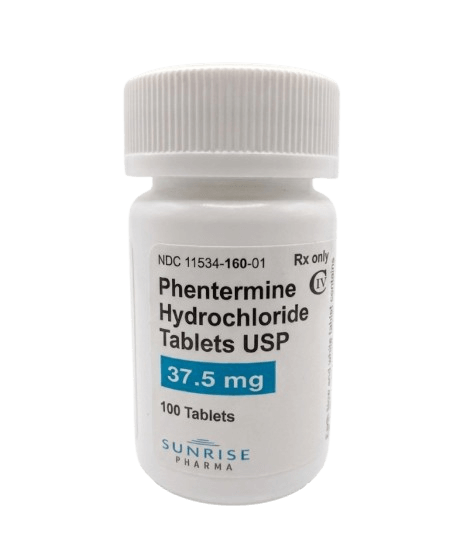
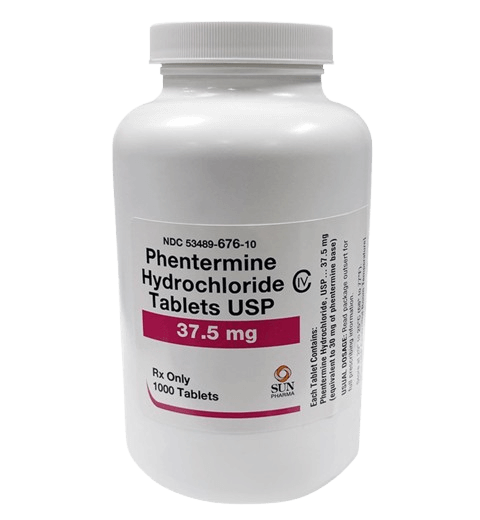
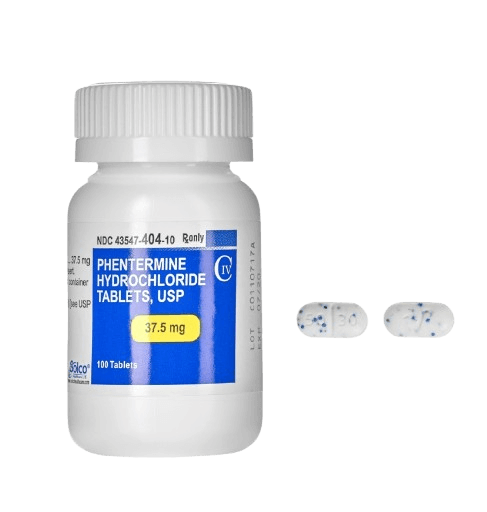
What Is Phentermine 37.5mg?
Phentermine hydrochloride is a sympathomimetic amine that reduces appetite by stimulating the release of norepinephrine and dopamine in the hypothalamus, the brain region that regulates hunger. It was FDA-approved in 1959 and remains the most prescribed weight loss medication in the United States. At 37.5mg, it is the maximum commonly prescribed daily dose.
How Phentermine Suppresses Appetite
Norepinephrine ReleaseStimulates norepinephrine release in the lateral hypothalamus, directly dampening the hunger signal. Most patients notice a substantial reduction in appetite within the first week.
Mild Stimulant EffectPatients often report increased energy and alertness alongside reduced appetite. This is also why it should be taken in the morning and why it is used short-term only.
Who Qualifies for Phentermine?
Adults with a BMI of 30 or above, or a BMI of 27 or above with at least one weight-related condition. Phentermine requires careful cardiovascular screening: it is contraindicated in patients with heart disease, uncontrolled high blood pressure, hyperthyroidism, glaucoma, or history of substance use disorders. A Vitercure clinician reviews your full cardiac and metabolic history before any prescription is considered.
How Well Does Phentermine Work?
Phentermine has a 65+ year track record, but most trials were short (12 weeks or less) and did not include the rigorous follow-up of modern GLP-1 studies. Here is an honest comparison.
| Medication | Avg Weight Loss | Trial Duration | Key Context |
|---|
| Phentermine 37.5mg | 5 to 15% | Typically 12 weeks | Short-term only, lowest cost |
| Phentermine + topiramate (Qsymia) | 9.3% | 52 weeks (CONQUER) | Combination Rx, longer approved duration |
| Saxenda (liraglutide) | 8.0% | 56 weeks (SCALE) | FDA-approved for chronic use, daily injection |
| Wegovy (semaglutide) | 15.3% | 68 weeks (STEP-1) | Chronic use, once-weekly injection |
| Zepbound (tirzepatide) | 22.5% | 72 weeks (SURMOUNT-1) | Highest efficacy, once-weekly injection |
Phentermine trials are shorter and may not be directly comparable. All outcomes include diet and exercise.
How to Take Phentermine 37.5mg
- Form: Oral capsule, 37.5mg (maximum common daily dose).
- Frequency: Once daily. Do not split or double the dose.
- Timing: Take in the morning, before breakfast or 1 to 2 hours after. Late-day dosing causes insomnia.
- Duration: Short-term only, typically a few weeks up to 12 weeks. Your clinician determines the course.
- Storage: Room temperature. Keep away from heat and moisture.
- Controlled substance: Do not share. Do not take more than prescribed. Schedule IV in the US.
Why morning timing matters: Phentermine's stimulant properties can delay sleep if taken in the afternoon or evening. Most clinicians recommend taking it first thing in the morning. If you notice difficulty sleeping, speak with your prescriber about adjusting timing before changing your dose.
Phentermine vs Wegovy, Saxenda, and Zepbound
The most common question: "Should I take phentermine or a GLP-1?" They serve different patient profiles and treatment goals.
| Feature | Phentermine | Saxenda | Wegovy | Zepbound |
|---|
| Mechanism | CNS appetite suppression | GLP-1 | GLP-1 | Dual GIP+GLP-1 |
| Form | Oral capsule | Daily injection | Weekly injection | Weekly injection |
| Avg weight loss | 5 to 15% (12 wk) | 8.0% (56 wk) | 15.3% (68 wk) | 22.5% (72 wk) |
| Approved duration | Short-term only | Chronic | Chronic | Chronic |
| Monthly cost (approx) | $30 to $100 | $350 to $1,400+ | $800 to $1,350+ | $700 to $1,100+ |
| Controlled substance | Yes, Schedule IV | No | No | No |
Phentermine as a Bridge to GLP-1 Therapy
Some clinicians use phentermine as an affordable short-term kickstart to help patients achieve initial weight loss and build behavioral momentum before transitioning to a GLP-1 or dual-incretin medication for long-term management. Your Vitercure prescriber can help design this kind of sequential strategy if appropriate.
Important Safety Information for Phentermine
This is not a complete list. Always review the full Prescribing Information and speak with a licensed clinician.
Do Not Use Phentermine If:
- You have cardiovascular disease, uncontrolled hypertension, or history of stroke.
- You have hyperthyroidism, glaucoma, or agitated states.
- You have a history of drug abuse or dependence.
- You are pregnant, breastfeeding, or may become pregnant.
- You are taking MAO inhibitors or took them in the last 14 days.
Cardiovascular Monitoring
Phentermine can increase heart rate and blood pressure. Vitercure clinicians perform baseline and ongoing cardiovascular screening. Contact your prescriber immediately for chest pain, shortness of breath, fainting, leg swelling, or new or worsening mood changes.
Common Side Effects
Dry mouth (very common), difficulty sleeping, restlessness or nervousness, increased heart rate, elevated blood pressure, constipation, and headache. Most are worst in the first 1 to 2 weeks and lessen as the body adjusts. Morning dosing reduces insomnia risk.
Is Phentermine Addictive?
Phentermine is chemically related to amphetamines and classified as Schedule IV due to potential for dependence with long-term use. This is why it is prescribed only short-term under close medical supervision. Your Vitercure clinician will screen for substance use concerns before prescribing.
Frequently Asked Questions About Phentermine
Short-term clinical trials (typically 12 weeks) show average weight loss of 5 to 15% of body weight when phentermine is combined with a reduced-calorie diet and exercise. The CONQUER trial of phentermine plus topiramate (Qsymia) showed 9.3% average weight loss at 52 weeks. Individual results vary based on starting weight, adherence, and duration of treatment.
Phentermine HCl 37.5mg has a half-life of roughly 20 to 24 hours, so it stays active for most of the day from a single morning dose. Appetite suppression is typically strongest in the first 3 to 6 hours after taking it, and evening hunger may return as levels decline. Morning dosing is standard to minimize sleep disruption.
Weight regain is common after stopping phentermine unless dietary and activity habits have changed during treatment. Phentermine is a short-term tool. Some patients transition to GLP-1 medications for longer-term support after using phentermine as a kickstart.
Adipex-P is a branded formulation of phentermine. They contain the same active ingredient (phentermine HCl 37.5mg). Other brands include Lomaira (8mg dose) and Suprenza. Vitercure partner pharmacies dispense approved phentermine products as prescribed.
Combining phentermine with GLP-1 medications is not standard practice and can be complex. The cardiovascular stimulant effects of phentermine may interact with GLP-1 cardiac profiles. Your Vitercure prescriber will determine whether any combination is appropriate for you.
Phentermine is contraindicated in patients with cardiovascular disease, uncontrolled hypertension, hyperthyroidism, glaucoma, history of drug abuse, pregnancy, or those taking MAO inhibitors. A Vitercure clinician performs full cardiovascular screening before prescribing.
Yes. Through Vitercure, a licensed clinician reviews your medical history and cardiovascular risk factors through our HIPAA-compliant telehealth platform. If appropriate, they can prescribe phentermine without an in-person visit. A valid prescription is always required.
Phentermine 37.5mg packs range from $89 (30 capsules, US source) to $239 (90 capsules, UK source). This is significantly less than GLP-1 medications, which typically cost $700 to $1,500 or more per month.